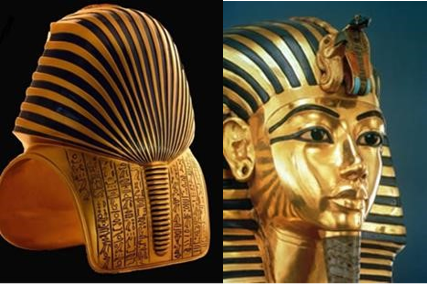
This program will examine selected hieroglyphic texts and the names of deities from Chapter 17 of The Book of the Dead, as inscribed on objects within the tomb of King Tutankhamun. By combining Egyptological research with Jungian psychology, it will demonstrate how these ancient symbols represent a profound process of psychological transformation.
Rather than viewing death solely as a physical event, the inscriptions can be understood as a symbolic expression of an inner journey – one that leads to renewal and the emergence of a new consciousness. The names of the deities, the funerary offerings, and the ritual acts reveal patterns that correspond to the transformation processes described in depth psychology. These elements function not only within the framework of ancient Egyptian religious thought but also as archetypal images of psychological development appearing in the psyche of an Egyptian woman.
By bridging ancient Egyptian religious concepts with the symbolic interpretation found in Jungian psychology, this lecture offers a fresh perspective on the tomb of Tutankhamun and the enduring significance of its texts for understanding the processes of human transformation.
Samah Samir, Diplomate Jungian Analyst Candidate, is an Egyptologist and a Jungian psychoanalyst in training. Her work bridges the symbolic world of ancient Egypt with modern analytical psychology. After graduating from the German School in Cairo, she studied Egyptology at Cairo University and began her professional career at the Egyptian Museum in Cairo. For more than twenty years, she has also worked as a professional tour guide, sharing the cultural and spiritual traditions of Egypt. For over a decade, she has been deeply engaged with the analytical psychology of C.G. Jung and the study of symbols. She is currently completing her training at the Research and Training Centre for Depth Psychology According to C.G. Jung and Marie-Louise von Franz in Zurich.
Learning objectives:
- Discuss the symbolic imagery of ancient Egyptian funerary traditions from the psychological perspective of C. G. Jung and depth psychology.
- Learn how particular Egyptian symbols (Nun, lotus, Eye of Horus, the Ba, the golden mask) are expressions of both ancient religious and modern psychological transformation.
- Appreciate that the ancient heritage of Egypt is a living heritage, transforming collective culture as well as the individuation process of the modern person.